Most big box writing programs begin the year with narrative essays or a “Writer’s Workshop Launch.”
It’s well-intended: hook students with creativity, build a love of writing, and let engagement lead to proficiency.
But in practice, students are asked to draft essays before they can reliably write a complete sentence. It’s the academic version of handing a child a violin and asking for a concerto before they’ve ever practiced scales.
The outcome? Run-ons, fragments, confusion, and a heavy reliance on “fix-it” conferences that drain time without building durable skill.
If 73% of eighth graders nationwide are scoring below writing proficiency, we can’t keep hoping the system works. Hope is not a system. Structured, explicit instruction is.
Why Sentence Writing Comes First
Writing is one of the most cognitively demanding tasks students face. Every sentence requires multiple subskills: grammar, thought organization, vocabulary, spelling, and handwriting/typing all working together.
Starting at the sentence level reduces the cognitive load later on. It also provides a fast, accurate way to spot which students can manage grade level writing expectations and who will need scaffolds, small group support, or even intervention.
In just the first two weeks, you’ll know:
- Who can independently construct sentences.
- Who struggles with fragments or run-ons.
- Who needs explicit scaffolds, like SRSD strategies. (We see a lot of self-starting issues at the beginning of the year.)
- Who might require Tier 2 intervention or additional support services.
That’s valuable data you don’t get when you launch straight into Writer’s Workshop or essays.
Explicit Writing Instruction: The I Do, We Do, You Do Approach
Explicit Writing Instruction follows a gradual release model:
- I Do: The teacher models what strong writing looks like, lowering the cognitive load and clarifying expectations.
- We Do: Students practice with guidance and feedback, building accuracy without frustration.
- You Do: Students apply skills independently, giving teachers a true formative check of who has mastered the skill.
This cycle makes thinking visible and builds confidence. Tier 1 instruction, done this way, reaches most students and reduces the number who will need Tier 2 intervention later.
What We Teach in the First Two Weeks
Instead of starting with a narrative essay, TTND’s Comprehensive Sentence Writing Program begins with the building blocks of complete sentences. Here’s a look at the opening sequence.
Week 1: Subjects and Predicates
- Define sentences and fragments (subject + predicate).
- Practice identifying simple and complete subjects/predicates.
- Explore compound subjects and predicates.
- Learn the four types of sentences (statement, question, command, exclamation).
Week 2: Fragments and Run-Ons
- Contrast complete sentences with fragments.
- Practice identifying what’s missing (subject or predicate) and repairing fragments.
- Learn how to identify and fix run-on sentences.
- Introduce strategies for fixing run-ons: FANBOYS, subordinating conjunctions, and semicolons.
By the end of just ten school days, students have a working understanding of what makes a complete sentence. They can identify errors, fix them, and apply multiple strategies independently.
Best yet? They’ve been exposed to exemplar after exemplar.
When students see what good writing looks like, they’re able to emulate it within their own writing. Thus, meeting grade-level expectations more easily because the end result is clear.
Formative Assessments That Save Time
The beauty of sentence-level instruction is that it allows for low-lift, high-yield assessments.
- Index cards: A quick exit ticket where students can just write a sentence or two based on the day’s skill.
- Color-coding: Subjects and predicates in different colors show understanding at a glance. (A sneaky way to get students confirming that what they’ve written is a complete thought.)
- Sorts and task cards: Interactive checks that double as practice.
- “Fix it” items: Pinpoint specific misconceptions without giving a full test while setting the expectation that editing and revision will be a consistent part of the writing block.
Within two weeks, you’ll have a clear roster of who is on grade level and who needs extra support, saving hours of intervention work later.
Communicating Writing Proficiency with Parents and Guardians
Starting with sentence-level writing also makes it easier to communicate with families about expectations. Instead of saying, “Your child needs to work on writing,” you can say:
- “Right now, your child is writing in fragments instead of complete sentences.”
- “We’re building strategies to fix run-ons, and here’s one you can practice at home.”
- “Here’s an example of a sentence that meets expectations and one that doesn’t.”
This clarity reassures parents that progress is measurable and gives them concrete ways to support their child. Most parents have no idea what to expect from their child. Being crystal clear from the get-go is key to garnering parental support throughout the year.
The Writing Instruction Payoff
By investing the first four weeks in sentence writing, you create a foundation that pays dividends all year long:
- Fewer Tier 2 interventions.
- Clearer, stronger student writing.
- More efficient formative assessments.
- Parents who understand expectations and can support them at home.
When students master sentences first, paragraphs and essays become far more manageable. Structure leads to confidence, and confidence leads to proficiency.
Solving the Writing Crisis Doesn’t Mean Reinventing the Wheel
Improving writing outcomes for our students does not require scrapping everything teachers already know or use. It means eliminating the practices that don’t work and optimizing the ones that do so students can build lasting writing skills.
We don’t need to throw away the idea of writing choice, peer collaboration, or even creative assignments. What needs to change is the order and structure. By starting the year with sentence-level instruction, we set students up with the tools they need to succeed before asking them to take on paragraphs and essays.
This approach:
- Keeps what works – lessons on idea generation, collaboration, and craft stay in your plans, but come later when students are ready.
- Eliminates what doesn’t – no more starting the year with five-paragraph essays or narrative “seed stories” that overwhelm students who lack foundational skills.
- Optimizes instruction – using explicit, scaffolded lessons that gradually release responsibility, so students become independent writers without feeling lost.
This is not about reinventing the wheel. Teachers don’t have time for that. It is about putting the pieces of writing instruction in the right order and delivering it in the right way so that students can actually master the skills and build the confidence they need to succeed.
Get Your Free Beginning-of-the-Year Writing Instruction Guide
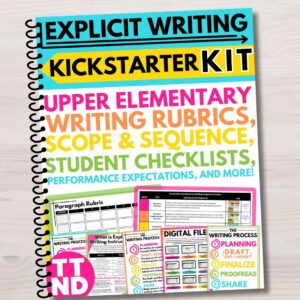
The Explicit Writing Kickstarter Kit is a free, 98-page guide that helps upper elementary teachers implement this approach without starting from scratch. It includes:
- A yearlong writing roadmap (editable for your school calendar)
- Day-by-day lesson plan outlines for the entire school year
- Standards-based objectives and editable access to planning docs
- Links to TTND’s ready-to-use resources
- Writing skill progression map and so much more
Download your free kit here and join over 30,000 teachers who are using explicit, sentence-level instruction to help students succeed with writing in 2025–2026.
Frequently Asked Questions
1. Why should writing instruction start with sentences instead of essays?
Starting the year with essay writing overloads students who haven’t rebuilt their writing stamina after summer. Sentence writing instruction reduces cognitive load, builds confidence, and creates the foundation students need before tackling paragraphs and essays.
2. How is sentence writing instruction different from Writer’s Workshop?
Writer’s Workshop often relies on mini-lessons and unstructured writing time, which leaves struggling writers behind. Sentence writing instruction uses explicit modeling, guided practice, and scaffolds to ensure every student can write complete, varied sentences before moving on to bigger tasks.
3. Does teaching sentence writing take away from creativity?
No. Teaching sentence skills first makes creative writing easier because students have the stamina and tools to express ideas clearly. Once students can confidently write complete sentences, they’re better prepared to enjoy narrative writing, persuasive essays, and choice-driven projects later in the year.